

Physics of Hybrid Systems
Share:
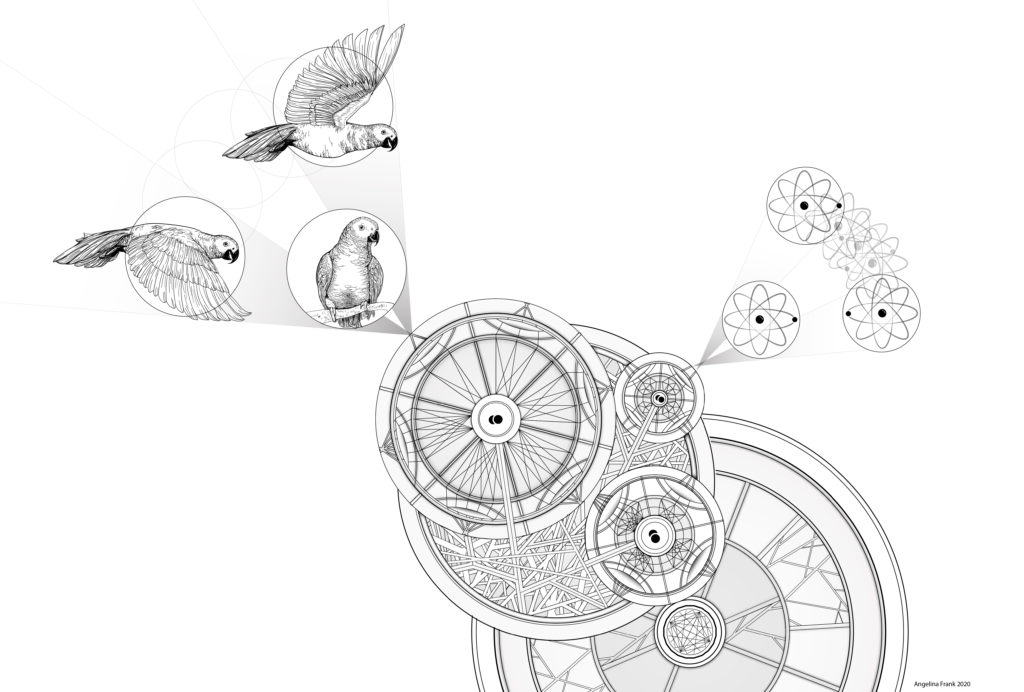
An important case where traditional dynamical laws break down is that of what I call hybrid systems: where a quantum system (for instance, a qubit) interacts with another system that may not fully obey quantum theory, or whose dynamical trajectories are so complicated that they cannot be computed exactly.
A notorious example of the former case is gravity: we have several inequivalent formulations of a quantum theory of gravity, but the best theory of gravity that we possess at present is still Einstein’s general relativity, which is not quantum at all.
Another example (of the second kind of hybrid systems) is a macroscopic system with lots of degrees of freedom (e.g. a living cell or even a cat!) interacting with a qubit. Such systems have been key to thought experiments like Schrödinger cat, but their dynamics may be intractable.
So how do we make predictions in these cases? Theories of principles, such as constructor theory, come to the rescue. This is because they do not rely on specific laws of motion, but they are more general: they constrain laws of motion, those that are known and those that are yet to be known.
Constructor theory’s principles are formidable tools to deal with hybrid systems – this research programme explores their applications to various qubit systems, to design experiments that probe the physics of hybrid systems.
Comments
If you have any comments, questions, or an observations about this research study, please do feel free to leave a comment below and we will make every endeavour to respond.
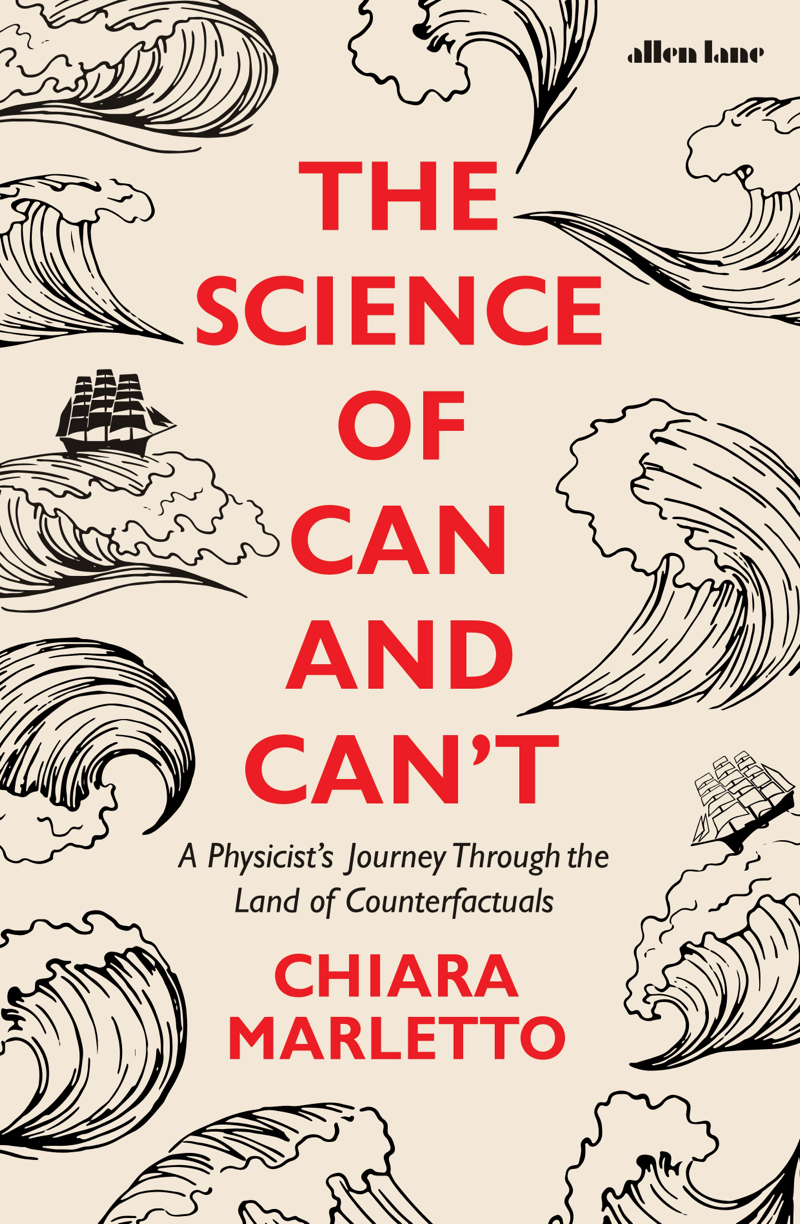
THE SCIENCE OF CAN AND CAN’T
A Physicist’s Journey Through the Land of Counterfactuals
A luminous guide to how the radical new science of counterfactuals can reveal the full scope of our universe
There is a vast class of properties that science has so far almost entirely neglected. These properties are central to an understanding of physical reality both at an everyday level and at the level of fundamental phenomena, yet they have traditionally been thought of as impossible to incorporate into fundamental explanations. They relate not only to what is true - the actual - but to what could be true - the counterfactual.
This is the science of can and can't.