

My thoughts
By Libby Heaney
Artist and scientist
Share:
1) How did you choose your profession?
I didn’t choose, art chose me.
2) How do you convey passion for a given subject?
Dedication to making art work that inspires audiences.
3) What are the key elements of a good education system?
[broadly intended: need not be school as traditionally conceived]
Inspiring curiosity.
4) How do you deliver criticism to improve someone’s work?
Deep understanding of their intentions then the sandwich method.
5) How would you describe the ideal relationship between student and teacher/mentor?
Collaborative.
6) How do you keep the love for learning alive throughout one’s life?
It comes from them.
7) If you had to deliver a series of lectures to some aliens (perfectly capable of learning, but with no knowledge of our world), what topic would you choose?
Imagining new social systems through the lens of quantum physics (because our current capitalist one has fucked up the planet).
Comments
If you have any comments, questions, or an observations about this article, please do feel free to leave a comment below and we will make every endeavour to respond.
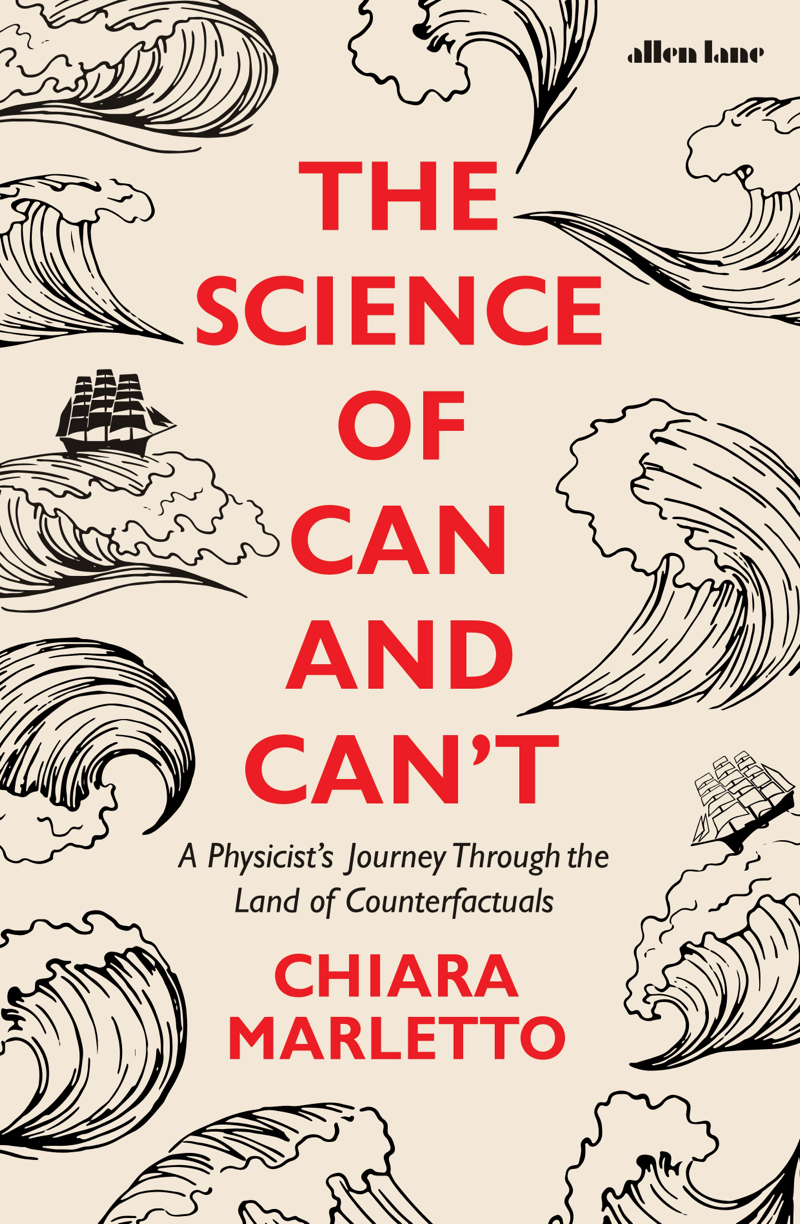
THE SCIENCE OF CAN AND CAN’T
A Physicist’s Journey Through the Land of Counterfactuals
A luminous guide to how the radical new science of counterfactuals can reveal the full scope of our universe
There is a vast class of properties that science has so far almost entirely neglected. These properties are central to an understanding of physical reality both at an everyday level and at the level of fundamental phenomena, yet they have traditionally been thought of as impossible to incorporate into fundamental explanations. They relate not only to what is true - the actual - but to what could be true - the counterfactual.
This is the science of can and can't.