

My thoughts
By Vlatko Vedral
Physicist and author
Share:

1) How did you choose your profession?
I didn’t feel I had any choice from about the age of 15 onwards. Physics just grabbed me.
2) How do you convey passion for a subject?
You emphasise the things you find exciting about it and explain why.
3) What are the key elements of a good education system?
A good balance between repetitive and mundane on the one hand and inspirational and creative on the other. The exact topics are perhaps not even that relevant.
4) How do you deliver criticism to improve someone’s work?
I think this requires a good understanding of the psychology of the person you are criticising. Some general rules may apply, but even they depend on the person being criticised and the relationship you have with them.
5) How would you describe the ideal relationship between student and teacher/mentor?
Mr Myagi and Daniel LaRusso.
6) How do you keep the love for learning alive throughout one’s life?
It takes a lot of dedication and deliberate neglect of many things in order to learn new things…You must be aware of it and cultivate it – it gets easier once this becomes your way of life.
7) If you had to deliver a series of lectures to a class of aliens (perfectly capable of learning, but with no knowledge of our world), what topic would you choose?
Music.
Comments
If you have any comments, questions, or an observations about this article, please do feel free to leave a comment below and we will make every endeavour to respond.
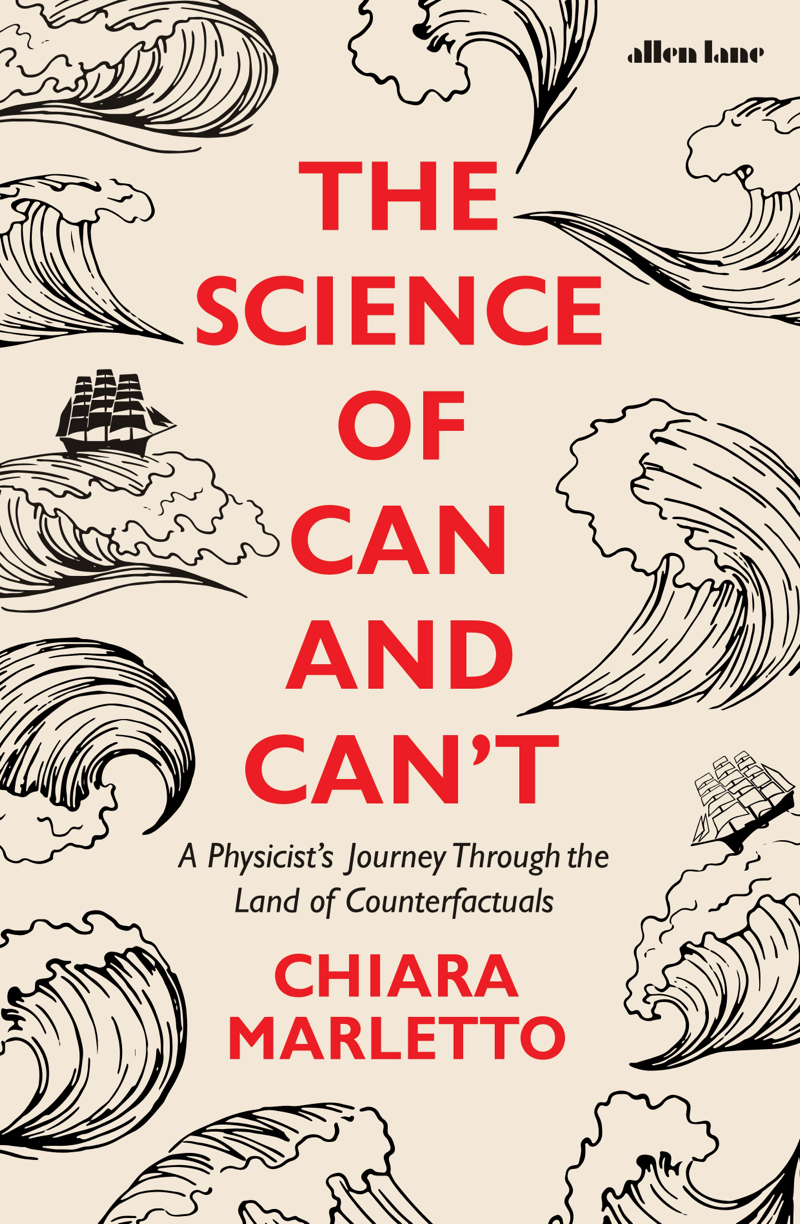
THE SCIENCE OF CAN AND CAN’T
A Physicist’s Journey Through the Land of Counterfactuals
A luminous guide to how the radical new science of counterfactuals can reveal the full scope of our universe
There is a vast class of properties that science has so far almost entirely neglected. These properties are central to an understanding of physical reality both at an everyday level and at the level of fundamental phenomena, yet they have traditionally been thought of as impossible to incorporate into fundamental explanations. They relate not only to what is true - the actual - but to what could be true - the counterfactual.
This is the science of can and can't.